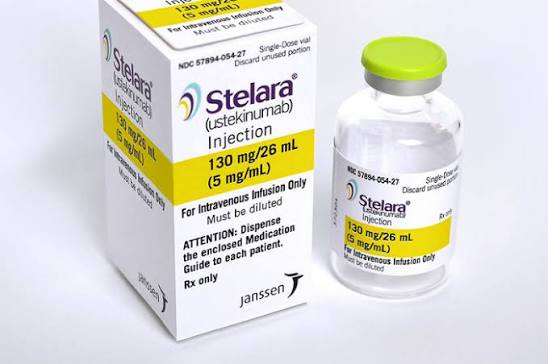
Stelara
Stelara
¿Qué es Stelara?
Stelara es una solución que se inyecta en las venas o la piel de los pacientes que padecen psoriasis en placas muy severa o artritis psoriásica. Actualmente no hay una versión genérica de Stelara disponible. Un suministro de 1 mL de la solución subcutánea Stelara 90 mg/mL es bastante caro, con un costo de aproximadamente $26,567. Los precios de Stelara son altos, pero puedes ahorrar hasta un 80% en el costo de tu Stelara utilizando un cupón gratuito de Stelara de Rx.com.Side Effects
- Diarrhea, stomach pain, vomiting
- Headache, seizures, confusion, blurred vision
- Fever, chills, cough, sore throat, stuffy or runny nose, body aches
Warnings
- Headache, seizures, confusion, and blurred vision
- Keep all medicine out of the reach of children. Never share your medicine with anyone.
- Your doctor will do lab tests at regular visits to check on the effects of this medicine. Keep all appointments.
- This medicine may cause the following problems:Increased risk of infectionIncreased risk of cancer (including skin cancer)Posterior reversible encephalopathy syndrome (PRES)Non-infectious pneumonia
- Tell your doctor if you are pregnant or breastfeeding, or if you have any type of infection or a history of cancer. Tell your doctor if you have tuberculosis (TB) or a history of TB, or have been in close contact with someone who has active TB. Tell your doctor if you have an allergy to latex. Tell your doctor if you have any new or changing lesions within psoriasis areas or on normal skin or have received phototherapy for your psoriasis.
Prescription savings · ·
¿Qué es Stelara ?
Stelara es una solución que se inyecta en las venas o la piel de los pacientes que padecen psoriasis en placas muy severa o artritis psoriásica. Actualmente no hay una versión genérica de Stelara disponible. Un suministro de 1 mL de la solución subcutánea Stelara 90 mg/mL es bastante caro, con un costo de aproximadamente $26,567. Los precios de Stelara son altos, pero puedes ahorrar hasta un 80% en el costo de tu Stelara utilizando un cupón gratuito de Stelara de Rx.com.Stelara Cupones y Precios - Rx.com
Stelara
Weight-loss medication, prescribed online
Licensed U.S. providers · No insurance needed · Shipped to your door
¿Busca un cupón de Stelara? Stelara (ustekinumab) es una inyección biológica de marca que se usa para la psoriasis en placas, la artritis psoriásica, la enfermedad de Crohn y la colitis ulcerosa, y es uno de los medicamentos más caros que a una persona se le puede pedir que pague en efectivo. No existe un ustekinumab genérico, pero la FDA ha aprobado varios biosimilares de ustekinumab, y ahí es donde por lo general están los verdaderos ahorros. Ingrese su código postal arriba para ver los precios de farmacia de hoy para Stelara y para imprimir, enviar por mensaje de texto o por correo electrónico un cupón de descuento gratuito de Rx.com que puede entregarle al farmacéutico. Nuestro cupón es un descuento sobre el precio en efectivo, así que puede usarse tenga o no tenga seguro, y no vence.
Qué es Stelara y cómo funciona
Stelara es el nombre de marca del ustekinumab, un anticuerpo monoclonal biológico fabricado por Johnson & Johnson (Janssen). Es un antagonista de la interleucina-12/23: se une a la subunidad p40 que comparten dos señales inmunitarias, la IL-12 y la IL-23, y las bloquea. Esas dos citocinas ayudan a impulsar la inflamación detrás de la psoriasis y de la enfermedad inflamatoria intestinal, así que calmarlas puede aliviar las placas de la piel, el dolor articular y la inflamación intestinal. Como amortigua parte del sistema inmunitario, se clasifica como inmunosupresor.
Stelara está aprobado por la FDA para la psoriasis en placas de moderada a grave en adultos y niños de 6 años en adelante que sean candidatos a fototerapia o terapia sistémica; la artritis psoriásica activa en adultos y niños de 6 años en adelante (sola o con metotrexato); la enfermedad de Crohn de moderada a gravemente activa en adultos y niños de 2 años en adelante; y la colitis ulcerosa de moderada a gravemente activa en adultos. (La indicación pediátrica para la enfermedad de Crohn se agregó a la etiqueta en 2026; la colitis ulcerosa sigue siendo una indicación solo para adultos). Stelara se administra como una inyección subcutánea (debajo de la piel) y, en adultos, el tratamiento para la enfermedad de Crohn o la colitis ulcerosa suele comenzar con una dosis de carga intravenosa única administrada en una clínica o centro de infusión. Los niños tratados por la enfermedad de Crohn también comienzan con una dosis intravenosa, pero tanto esa dosis como las inyecciones continuas se calculan según el peso corporal, así que el esquema y la dosis de su hijo provendrán del médico que las recete. No es una sustancia controlada.
Cupón de Stelara: tarjeta de ahorro del fabricante vs. el cupón en efectivo de Rx.com
Cuando busca aparecen dos tipos diferentes de "cupón de Stelara", y no son intercambiables:
- La tarjeta de ahorro del fabricante. Johnson & Johnson ofrece un programa oficial de apoyo y ahorro para Stelara (los detalles están en el propio sitio web de Stelara del fabricante, StelaraInfo.com, y a través de su servicio de apoyo al paciente, ahora con la marca J&J withMe, antes Janssen CarePath). Las tarjetas de copago del fabricante como esta suelen estar limitadas a personas con seguro comercial (del empleador o del mercado de seguros). Las personas con Medicare, Medicaid, TRICARE, cobertura de VA u otros planes gubernamentales por lo general no son elegibles, y las reglas de elegibilidad, los montos del beneficio y los límites anuales varían y cambian, así que verifique siempre los términos vigentes directamente con el programa del fabricante.
- El cupón en efectivo de Rx.com. El nuestro es un descuento sobre el precio en efectivo, no un seguro. Úselo cuando no tenga seguro, cuando tenga Medicare u otro plan gubernamental que lo excluya de la tarjeta del fabricante, cuando su plan niegue o retrase la cobertura, o cuando no haya alcanzado su deducible. Ingrese su código postal arriba para ver el precio de hoy cerca de usted y luego muéstrele el cupón al farmacéutico antes de que registre la receta.
Como Stelara es un biológico especializado, muchas recetas se surten a través de una farmacia especializada en lugar de una farmacia de barrio, así que los precios y la aceptación del cupón pueden variar de una farmacia a otra. Vale la pena verificar el precio arriba y llamar a la farmacia antes de ir. Si el costo sigue estando fuera de su alcance, pregunte en el consultorio de quien le receta sobre el programa de asistencia al paciente del fabricante (Johnson & Johnson tiene uno para personas que no tienen seguro y cumplen con los requisitos de ingresos) y sobre las subvenciones de fundaciones sin fines de lucro para la psoriasis y la enfermedad inflamatoria intestinal.
Biosimilares: la mayor palanca de ahorro para el ustekinumab
No existe una versión genérica de Stelara, y no la habrá en el sentido habitual: los biológicos tienen biosimilares, no genéricos. La FDA ya ha aprobado una larga lista de biosimilares de ustekinumab, incluidos Wezlana (ustekinumab-auub), Selarsdi (ustekinumab-aekn), Pyzchiva (ustekinumab-ttwe), Otulfi (ustekinumab-aauz), Imuldosa (ustekinumab-srlf), Yesintek (ustekinumab-kfce), Steqeyma (ustekinumab-stba) y Starjemza (ustekinumab-hmny). Un biosimilar es muy similar a Stelara, sin diferencias clínicamente significativas en seguridad ni en eficacia.
Los precios de los biosimilares y de la marca varían según la farmacia y el plan, así que la única manera de saber lo que en realidad pagaría es comparar el producto específico en farmacias específicas. Las reglas de sustitución también son distintas de las de los genéricos: un farmacéutico solo puede reemplazar un biosimilar por Stelara sin llamar a su médico si ese producto específico ha sido designado como intercambiable y su estado lo permite, y su aseguradora puede preferir un biosimilar en particular sobre los demás. Pregunte a quien le receta y a su farmacéutico qué producto de ustekinumab cubre su plan, y busque el nombre de ese producto en Rx.com para comparar también su precio en efectivo.
Cómo se compara Stelara con otros biológicos
Stelara bloquea tanto la IL-12 como la IL-23. Los biológicos más nuevos para la psoriasis atacan solo la IL-23, como Skyrizi (risankizumab) y Tremfya (guselkumab). Otros bloquean la IL-17, como Cosentyx (secukinumab) y Taltz (ixekizumab). Los bloqueadores del TNF como Humira (adalimumab) y Remicade (infliximab) actúan sobre una vía diferente y se usan en la psoriasis, la artritis psoriásica y la enfermedad inflamatoria intestinal. Para la enfermedad de Crohn y la colitis ulcerosa, Entyvio (vedolizumab) es una opción selectiva del intestino. Otezla (apremilast) no es un biológico en absoluto: es una pastilla para la psoriasis en placas y la artritis psoriásica.
Estos medicamentos se diferencian en cómo se administran (pluma o jeringa autoinyectable, infusión o tableta oral), con qué frecuencia, y para qué afecciones y edades están aprobados, así que no son intercambiables. Quien le receta sopesará qué afección tiene usted, qué ha probado ya, su historial de infecciones y su cobertura de seguro. Cualquiera de estos puede consultarse por precio en Rx.com y, si el costo es el obstáculo, vale la pena preguntarle a su médico si alguna alternativa de la lista podría servirle.
Seguridad: qué saber antes y durante el tratamiento
Stelara no lleva una advertencia en recuadro, pero sí reduce sus defensas contra las infecciones. Su médico debería hacerle una prueba de tuberculosis antes de que empiece y vigilar la aparición de TB activa durante el tratamiento, y usted no debe comenzar Stelara mientras tenga una infección activa y clínicamente importante. Llame a su proveedor si tiene fiebre, tos o cualquier infección que no se cure. Stelara es un inmunosupresor y puede aumentar el riesgo de malignidad (cáncer); la etiqueta señala que los pacientes mayores de 60 años, las personas en terapia inmunosupresora prolongada y quienes tienen antecedentes de tratamiento con luz PUVA deben ser vigilados para detectar cáncer de piel no melanoma, así que los controles regulares de la piel son sensatos. No reciba vacunas vivas mientras esté tomando Stelara, y trate de completar las inmunizaciones apropiadas para la edad antes de que usted o su hijo comiencen.
Problemas más raros pero graves incluyen reacciones alérgicas severas (anafilaxia, angioedema), neumonía no infecciosa (intersticial o eosinofílica) y el síndrome de encefalopatía posterior reversible (PRES): busque atención médica de inmediato si tiene un dolor de cabeza intenso, convulsiones, confusión o cambios en la visión. Los efectos secundarios más comunes son mucho más leves: síntomas de resfriado y de las vías respiratorias superiores, dolor de cabeza, cansancio, enrojecimiento o dolor en el lugar de la inyección, náuseas y diarrea. Esta página es información general, no consejo médico; hable con su médico o farmacéutico sobre su propio historial de salud, otros medicamentos y cualquier efecto secundario que note.
La información sobre Stelara fue redactada y revisada con base en fuentes médicas autorizadas de EE. UU. (MedlinePlus, de la Biblioteca Nacional de Medicina de EE. UU.; DailyMed; y la información de prescripción de la FDA) y verificada para asegurar su precisión. Se ofrece con fines educativos y no sustituye el consejo médico profesional.
Consulte la etiqueta oficial: Stelara en DailyMed (FDA)
Revisado con base en el etiquetado de la FDA · Última revisión: julio de 2026
Medicamentos Relacionados
Browse more medications: starting with S · full A-Z directory · by condition · common drugs
Medical disclaimer: This information is provided for general educational purposes only and is not medical advice. It is not a substitute for professional diagnosis or treatment. Always consult a licensed physician, pharmacist, or other qualified healthcare provider before starting, stopping, or changing any medication or treatment. Never disregard professional medical advice or delay seeking it because of something you read here. If you think you may have a medical emergency, call your doctor or 911 immediately.


