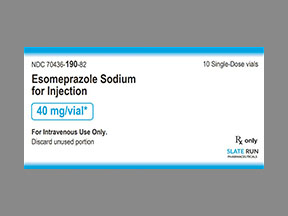
Esomeprazole Sodium
Esomeprazole Sodium 40MG
What is Esomeprazole Sodium?
Esomeprazole Sodium is a proton pump inhibitor (PPI) used to reduce the production of stomach acid, effectively treating gastroesophageal reflux disease (GERD) and other acid-related conditions. By inhibiting the H+/K+ ATPase enzyme in gastric parietal cells, it alleviates symptoms such as heartburn, regurgitation, and esophagitis, promoting mucosal healing.Side Effects
- Severe diarrhea that does not go away, stomach cramps or pain, nausea, vomiting, loss of appetite, weight loss
- Seizures, dizziness, fast or uneven heartbeat, muscle cramps or twitching
- Joint pain, rash on your cheeks or arms that gets worse in the sun
Warnings
- Tell your doctor if you are pregnant or breastfeeding, or if you have kidney disease, liver disease, lupus, stomach or bowel cancer, or osteoporosis.
- This medicine may cause the following problems:Kidney problems, including acute tubulointerstitial nephritisIncreased risk of broken bones in the hip, wrist, or spine (more likely if received several times per day or longer than 1 year)Serious skin reactions, including Stevens-Johnson syndrome, toxic epidermal necrolysis, acute generalized exanthematous pustulosis, and drug reaction with eosinophilia and systemic symptoms (DRESS)LupusFundic gland polyps (abnormal growth in the upper part of your stomach)
- This medicine can cause diarrhea. Call your doctor if the diarrhea becomes severe, does not stop, or is bloody. Do not take any medicine to stop diarrhea until you have talked to your doctor. Diarrhea can occur 2 months or more after you stop taking this medicine.
- Tell any doctor or dentist who treats you that you are using this medicine. This medicine may affect certain medical test results.
- Your doctor will do lab tests at regular visits to check on the effects of this medicine. Keep all appointments.
Prescription savings · · · ·
What is Esomeprazole Sodium ?
Esomeprazole Sodium is a proton pump inhibitor (PPI) used to reduce the production of stomach acid, effectively treating gastroesophageal reflux disease (GERD) and other acid-related conditions. By inhibiting the H+/K+ ATPase enzyme in gastric parietal cells, it alleviates symptoms such as heartburn, regurgitation, and esophagitis, promoting mucosal healing.- Severe diarrhea that does not go away, stomach cramps or pain, nausea, vomiting, loss of appetite, weight loss
- Seizures, dizziness, fast or uneven heartbeat, muscle cramps or twitching
- Joint pain, rash on your cheeks or arms that gets worse in the sun
- Unusual bleeding, bruising, tiredness, or weakness
- Fever, swelling in your body, unusual weight gain, changes in how much or how often you urinate, blood in the urine
- Unusual tiredness or weakness
- Allergic reaction: Itching or hives, swelling in your face or hands, swelling or tingling in your mouth or throat, chest tightness, trouble breathing
- Blistering, peeling, red skin rash
- Dry mouth, increased thirst, confusion, numbness and tingling around the mouth, fingertips, or feet
- Tell your doctor if you are pregnant or breastfeeding, or if you have kidney disease, liver disease, lupus, stomach or bowel cancer, or osteoporosis.
- This medicine may cause the following problems:Kidney problems, including acute tubulointerstitial nephritisIncreased risk of broken bones in the hip, wrist, or spine (more likely if received several times per day or longer than 1 year)Serious skin reactions, including Stevens-Johnson syndrome, toxic epidermal necrolysis, acute generalized exanthematous pustulosis, and drug reaction with eosinophilia and systemic symptoms (DRESS)LupusFundic gland polyps (abnormal growth in the upper part of your stomach)
- This medicine can cause diarrhea. Call your doctor if the diarrhea becomes severe, does not stop, or is bloody. Do not take any medicine to stop diarrhea until you have talked to your doctor. Diarrhea can occur 2 months or more after you stop taking this medicine.
- Tell any doctor or dentist who treats you that you are using this medicine. This medicine may affect certain medical test results.
- Your doctor will do lab tests at regular visits to check on the effects of this medicine. Keep all appointments.
- Severe diarrhea that does not go away, fever
- Stomach pain, nausea, vomiting, weight loss
Esomeprazole Sodium Coupons & Prices
Esomeprazole Sodium 40MG
Weight-loss medication, prescribed online
Licensed U.S. providers · No insurance needed · Shipped to your door
If you're comparing prices for an esomeprazole sodium coupon, keep in mind this is the injectable (IV) form of esomeprazole — a proton pump inhibitor typically given by a healthcare professional in a hospital or clinical setting rather than picked up as a take-home prescription. A generic version is available from multiple manufacturers, but injectable-drug pricing can still vary by pharmacy and supplier. Enter your ZIP code above and Rx.com compares pricing across more than 60,000 U.S. pharmacies so you can see today's price before you fill.
What Is Esomeprazole Sodium?
Esomeprazole sodium is the injectable (IV) form of esomeprazole, the S-isomer of omeprazole, in the proton pump inhibitor (PPI) drug class. It's formulated as a sodium salt supplied as a powder that a healthcare professional reconstitutes and administers by IV infusion or injection. Like other PPIs, it works by blocking the stomach's acid-producing pumps, reducing the amount of acid the stomach makes.
The product was originally introduced by AstraZeneca under the brand name Nexium I.V. Today it's supplied almost entirely as generic esomeprazole sodium for injection, including versions from manufacturers such as Gland Pharma and Eugia US.
Esomeprazole Sodium Cost and Savings
Esomeprazole sodium for injection is available as a generic, supplied by multiple manufacturers rather than under one dominant brand. Because it's most often given by a healthcare professional during a hospital stay or an outpatient infusion visit, the cost is typically billed through that facility and your insurance rather than picked up like a retail prescription. If you or a caregiver do need to price or fill an outpatient order, cost can still vary by pharmacy and supplier, so it pays to compare.
Enter your ZIP code above to compare pricing across pharmacies in the Rx.com network. Rx.com does not have a manufacturer savings card on file for esomeprazole sodium injection.
Esomeprazole Sodium vs. Oral Esomeprazole, Nexium, and Other PPIs
Esomeprazole sodium injection and oral esomeprazole (the generic of Nexium) deliver the same active PPI molecule, but they are different salts, given by different routes, for different FDA-approved uses. The oral tablet/capsule form is used for a broader range of conditions, including GERD, erosive esophagitis healing and maintenance, and — combined with antibiotics — H. pylori eradication. The injectable sodium form is reserved for short-term IV use when oral therapy isn't possible or appropriate, and for reducing rebleeding risk in adults after endoscopic treatment of a bleeding gastric or duodenal ulcer.
Other medicines in the same PPI class include omeprazole, pantoprazole, and lansoprazole. All work by reducing stomach acid production, though route of administration, approved patient ages, and specific indications differ — ask your care team which option fits your situation.
Safety Information
Esomeprazole sodium injection does not carry an FDA boxed warning. The current injection label includes warnings about acute kidney inflammation (acute tubulointerstitial nephritis) that can occur at any point during treatment, an increased risk of Clostridioides difficile-associated diarrhea, bone fracture risk with long-term or high-dose use, severe cutaneous adverse reactions, cutaneous and systemic lupus erythematosus, low magnesium levels (hypomagnesemia) with prolonged use, reduced effectiveness of clopidogrel when taken together, an interaction with St. John's Wort or rifampin that can lower esomeprazole levels, interference with diagnostic tests for neuroendocrine tumors, an interaction with high-dose methotrexate, and stomach (fundic gland) polyps with long-term use. It can also mask symptoms of stomach cancer, so tell your care team about any concerning symptoms before starting treatment.
- Headache
- Flatulence
- Nausea
- Abdominal pain
- Injection site reaction
- Diarrhea
- Dry mouth
- Dizziness or vertigo
- Constipation
- Itching (pruritus)
This is general information, not medical advice. Talk to your doctor, nurse, or pharmacist about your specific treatment plan and any interactions with your other medications.
This Esomeprazole Sodium information was written and reviewed against authoritative U.S. medical sources — MedlinePlus (U.S. National Library of Medicine), DailyMed, and FDA prescribing information — and checked for accuracy. It is provided for education and is not a substitute for professional medical advice.
Verify the official label: Esomeprazole Sodium on DailyMed (FDA)
Reviewed against FDA labeling · Last reviewed July 2026
Related Drugs
Browse more medications: starting with E · full A-Z directory · by condition · common drugs
Medical disclaimer: This information is provided for general educational purposes only and is not medical advice. It is not a substitute for professional diagnosis or treatment. Always consult a licensed physician, pharmacist, or other qualified healthcare provider before starting, stopping, or changing any medication or treatment. Never disregard professional medical advice or delay seeking it because of something you read here. If you think you may have a medical emergency, call your doctor or 911 immediately.


