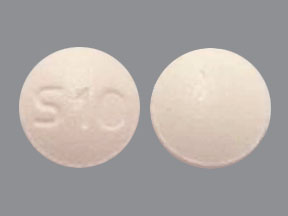
Solifenacin Succinate
Solifenacin Succinate 10MG
What is Solifenacin Succinate?
Solifenacin succinate is a muscarininc receptor antagonist used for the treatment of overactive bladder with symptoms of urge urinary incontinence, urgency, and urinary frequency. It works by relaxing the bladder muscles, thereby reducing the need to urinate frequently or urgently. Solifenacin is typically administered orally and is available in tablet form.Side Effects
- Fast, pounding, or uneven heartbeat
- Bloody or cloudy urine, change in how much or how often you urinate, difficult or painful urination
- Blurred vision, confusion, drowsiness, headache
Warnings
- Keep all medicine out of the reach of children. Never share your medicine with anyone.
- Tell your doctor if you are pregnant or breastfeeding or if you have kidney disease, liver disease, bladder blockage, controlled narrow-angle glaucoma, or stomach or bowel problems (including constipation), or a history of heart rhythm problems (including QT prolongation).
- This medicine may make you dizzy, drowsy, or cause blurred vision. Do not drive or do anything else that could be dangerous until you know how this medicine affects you.
- This medicine may make you sweat less, causing your body temperature to increase. Use extra care not to become overheated during exercise or hot weather while you are taking this medicine, since overheating may cause heat stroke.
- Your doctor will check your progress and the effects of this medicine at regular visits. Keep all appointments.
Prescription savings · · · ·
What is Solifenacin Succinate ?
Solifenacin succinate is a muscarininc receptor antagonist used for the treatment of overactive bladder with symptoms of urge urinary incontinence, urgency, and urinary frequency. It works by relaxing the bladder muscles, thereby reducing the need to urinate frequently or urgently. Solifenacin is typically administered orally and is available in tablet form.- Fast, pounding, or uneven heartbeat
- Bloody or cloudy urine, change in how much or how often you urinate, difficult or painful urination
- Blurred vision, confusion, drowsiness, headache
- Constipation that lasts for 3 days or longer, stomach pain
- Allergic reaction: Itching or hives, swelling in your face or hands, swelling or tingling in your mouth or throat, chest tightness, trouble breathing
- Fainting, dizziness, lightheadedness
- Keep all medicine out of the reach of children. Never share your medicine with anyone.
- Tell your doctor if you are pregnant or breastfeeding or if you have kidney disease, liver disease, bladder blockage, controlled narrow-angle glaucoma, or stomach or bowel problems (including constipation), or a history of heart rhythm problems (including QT prolongation).
- This medicine may make you dizzy, drowsy, or cause blurred vision. Do not drive or do anything else that could be dangerous until you know how this medicine affects you.
- This medicine may make you sweat less, causing your body temperature to increase. Use extra care not to become overheated during exercise or hot weather while you are taking this medicine, since overheating may cause heat stroke.
- Your doctor will check your progress and the effects of this medicine at regular visits. Keep all appointments.
Solifenacin Succinate Coupons & Prices
Solifenacin Succinate 10MG

Weight-loss medication, prescribed online
Licensed U.S. providers · No insurance needed · Shipped to your door
Looking for a solifenacin succinate coupon? Solifenacin succinate is the generic version of VESIcare, a once-daily tablet for overactive bladder, and pricing for it can vary widely from one pharmacy to the next. Rx.com compares prices at more than 60,000 U.S. pharmacies so you can see where your prescription costs less before you fill it — just enter your ZIP code above to see today's price near you.
What is solifenacin succinate and how does it work?
Solifenacin succinate is the generic name for the antimuscarinic (anticholinergic) tablet sold under the brand name VESIcare. It's FDA-approved to treat overactive bladder (OAB) in adults, easing symptoms of urge urinary incontinence, urgency, and urinary frequency. It works by relaxing the smooth muscle of the bladder, which helps reduce involuntary contractions that cause the sudden, hard-to-control need to urinate.
A related product, VESIcare LS oral suspension, is approved separately for neurogenic detrusor overactivity in children age 2 and older. Outside of overactive bladder, solifenacin doesn't have common off-label uses — OAB is essentially its sole indication.
Solifenacin succinate cost and how to compare pharmacy prices
Generic solifenacin succinate tablets are FDA-approved and available at pharmacies nationwide as a substitute for brand-name VESIcare. Manufacturer savings-card programs are typically reserved for the brand product, and any brand VESIcare savings offer from Astellas' official site would have its own terms and eligibility rules, so check directly with the manufacturer if you're prescribed the brand.
Because generic pricing can differ significantly depending on the pharmacy, your dose, and your insurance situation, it's worth comparing before you fill. Enter your ZIP code above to see today's price at pharmacies near you.
How solifenacin compares to other overactive bladder medications
Solifenacin isn't the only option for overactive bladder. Other antimuscarinic medications in the same general drug class include oxybutynin, tolterodine, trospium, fesoterodine, and darifenacin. Mirabegron works differently — it's a beta-3 agonist rather than an antimuscarinic — and is sometimes used as an alternative or, in some cases, alongside an antimuscarinic under a doctor's supervision.
Which OAB medication is the right fit depends on your symptoms, other health conditions, and how you tolerate side effects, so this is a decision to make with your prescriber rather than by switching on your own.
Safety information for solifenacin succinate
The FDA label for solifenacin includes a warning and precaution for angioedema: anticholinergic effects can include swelling of the face, lips, tongue, and/or throat, which may occur after even the first dose and can become life-threatening if it affects the airway. Stop taking the medication and get emergency care immediately if you notice swelling in these areas.
Solifenacin should not be used by people with urinary retention, gastric retention, uncontrolled narrow-angle glaucoma, or a known hypersensitivity to the drug. Other things to discuss with your provider include reduced sweating and heat-related illness risk in hot weather, conditions that slow stomach emptying, myasthenia gravis, confusion or hallucinations (more common in older adults), and heart rhythm (QT prolongation) concerns, especially if you take other medications that affect heart rhythm. Your doctor may also limit your dose if you have significant kidney or liver impairment or take certain other medications. This is general information, not medical advice — talk with your provider or pharmacist about whether solifenacin is right for you.
This Solifenacin Succinate information was written and reviewed against authoritative U.S. medical sources — MedlinePlus (U.S. National Library of Medicine), DailyMed, and FDA prescribing information — and checked for accuracy. It is provided for education and is not a substitute for professional medical advice.
Verify the official label: Solifenacin Succinate on DailyMed (FDA)
Reviewed against FDA labeling · Last reviewed July 2026
Related Drugs
Browse more medications: starting with S · full A-Z directory · by condition · common drugs
Medical disclaimer: This information is provided for general educational purposes only and is not medical advice. It is not a substitute for professional diagnosis or treatment. Always consult a licensed physician, pharmacist, or other qualified healthcare provider before starting, stopping, or changing any medication or treatment. Never disregard professional medical advice or delay seeking it because of something you read here. If you think you may have a medical emergency, call your doctor or 911 immediately.


