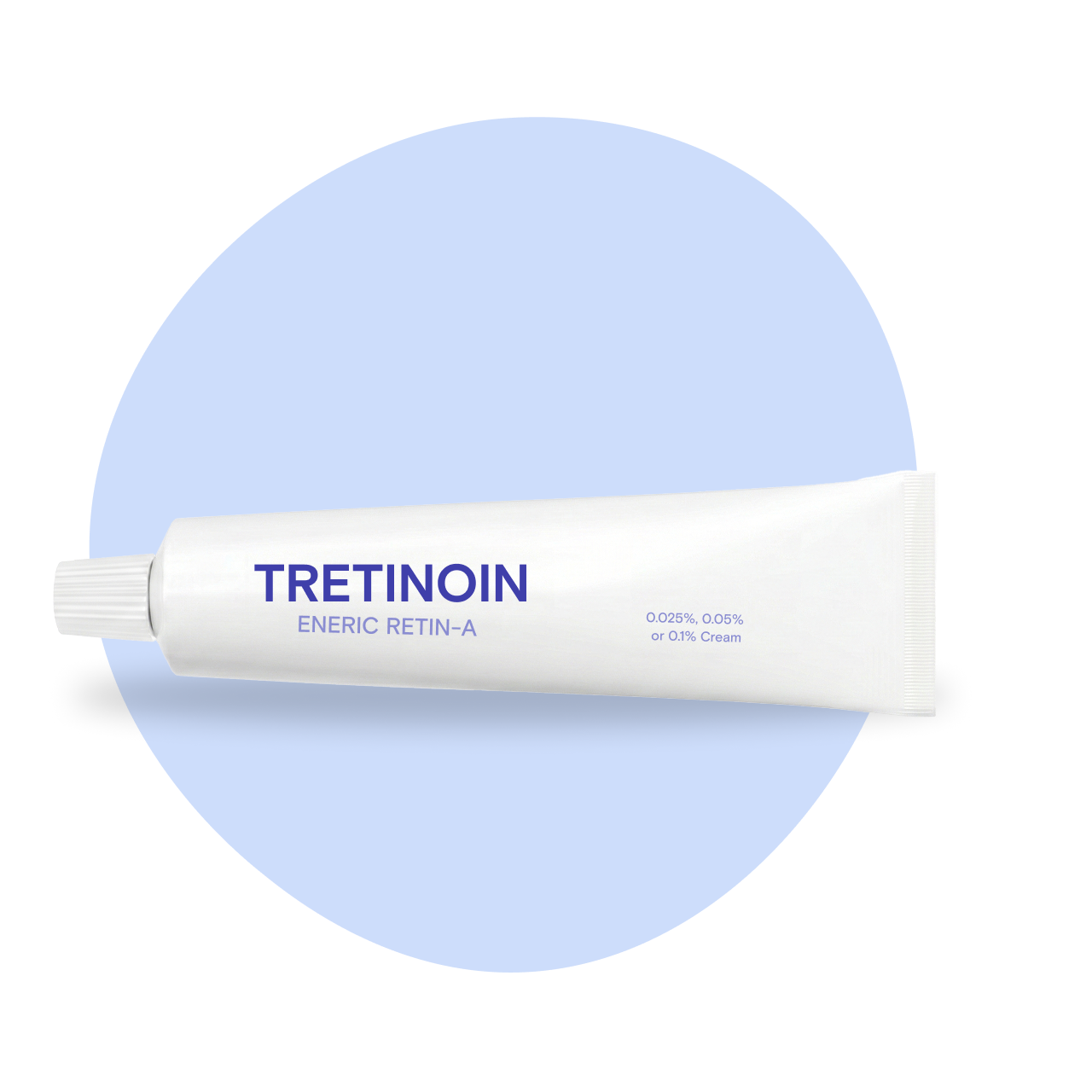
Tretinoin
Tretinoin 45GM of 0.025%
¿Qué es Tretinoin?
Avita es un agente tópico para el acné utilizado para tratar a pacientes con acné severo. Actualmente no hay un medicamento genérico de Avita disponible en el mercado. Avita tiene un costo aproximado de $97 por un suministro de 20 cremas al 0.025%, pero afortunadamente hay formas de ahorrar dinero. Puedes utilizar nuestra tarjeta de ahorro Rx.com Avita para ahorrar significativamente en el precio de venta al público en farmacias participantes cerca de ti.Side Effects
- Allergic reaction: Itching or hives, swelling in your face or hands, swelling or tingling in your mouth or throat, chest tightness, trouble breathing
- Severe or ongoing skin redness, peeling, itching, blistering, crusting, or swelling
- Skin warmth, stinging, or burning that continues or gets worse
Warnings
- Keep all medicine out of the reach of children. Never share your medicine with anyone.
- Your doctor will check your progress and the effects of this medicine at regular visits. Keep all appointments. During the first 3 to 6 weeks of using this medicine, your acne may seem to get worse. This means the medicine is working, and it is important that you keep using it.
- This medicine may make your skin more sensitive to sunlight, wind, and cold weather. Use a sunscreen when you are outdoors. Avoid sunlamps and tanning beds. You may need to wear protective clothing, including long sleeves and a hat.
- The gel form of this medicine is flammable. Do not smoke while you are using this medicine. Always keep it away from fire, flames, or high heat.
- Topical application routeDo not use this medicine to treat a skin problem your doctor has not examined.
Prescription savings · ·
¿Qué es Tretinoin ?
Avita es un agente tópico para el acné utilizado para tratar a pacientes con acné severo. Actualmente no hay un medicamento genérico de Avita disponible en el mercado. Avita tiene un costo aproximado de $97 por un suministro de 20 cremas al 0.025%, pero afortunadamente hay formas de ahorrar dinero. Puedes utilizar nuestra tarjeta de ahorro Rx.com Avita para ahorrar significativamente en el precio de venta al público en farmacias participantes cerca de ti.Tretinoin Cupones y Precios - Rx.com
Tretinoin 45GM of 0.025%
4 ED medications in one dose
Sildenafil, tadalafil, PT-141 & L-Citrulline · Works in ~15 min · Lasts up to 36 hours
Tretinoin prices by dosage
Lowest cash price with a free Rx.com coupon vs. the average retail price.
| Dosis | Cantidad | Retail price | Rx.com price |
|---|---|---|---|
| 20gm of 0.05% · Tube Of Cream | 20 | $32.79 | $24.90 |
| 20gm of 0.025% · Tube Of Cream | 20 | — | $24.90 |
| 20gm of 0.1% · Tube Of Cream | 20 | $35.18 | $26.61 |
| 45gm of 0.025% · Tube Of Cream | 45 | $71.99 | $38.32 |
| 45gm of 0.05% · Tube Of Cream | 45 | $73.59 | $51.14 |
| 45gm of 0.1% · Tube Of Cream | 45 | $80.51 | $48.99 |
Cash prices near ZIP 77433; updated regularly. Actual pharmacy price may vary.
¿Buscas un cupón para tretinoína? La tretinoína es la versión genérica de bajo costo de Retin-A y otras marcas de retinoides tópicos, pero el precio en efectivo en el mostrador de la farmacia puede variar mucho de una tienda a otra. Rx.com compara los precios de la tretinoína en más de 60,000 farmacias para que puedas encontrar un precio más bajo cerca de ti y usar un cupón de descuento gratuito al pagar. Ingresa tu código postal arriba para ver el precio de hoy.
¿Qué es la tretinoína y cómo funciona?
La tretinoína es un retinoide tópico, una forma de vitamina A, y uno de los retinoides de primera generación. Está aprobada por la FDA para tratar el acné vulgar y, en su forma emoliente (Renova), está aprobada para ayudar a reducir la apariencia de las líneas finas del rostro, las manchas oscuras irregulares y la textura áspera en la piel dañada por el sol, como parte de una rutina general de cuidado de la piel y protección solar. La tretinoína funciona acelerando la renovación de las células de la piel, lo que ayuda a destapar los poros y a suavizar la piel con el tiempo.
La tretinoína se vende bajo marcas que incluyen Retin-A, Retin-A Micro, Altreno, Atralin, Avita y Renova. El producto tópico no es una sustancia controlada. (Una forma oral aparte, Vesanoid, se usa únicamente en un tipo específico de leucemia y no es lo mismo que el producto para la piel que se describe aquí.)
Costo de la tretinoína sin seguro y cómo ahorrar
La tretinoína genérica está ampliamente disponible, lo que suele mantener su precio en efectivo más bajo que el de las versiones de marca. Aun así, lo que pagas sin seguro puede variar mucho según la farmacia que uses, por lo que conviene comparar antes de surtir tu receta. Rx.com revisa los precios en más de 60,000 farmacias y te ofrece un cupón gratuito que puedes mostrar en el mostrador, tengas o no seguro. Ingresa tu código postal arriba para ver el precio de hoy cerca de ti.
Si te recetan una marca específica como Altreno, el fabricante ofrece su propio programa de ahorro. Puedes revisar los detalles oficiales en la página de ahorro de Altreno; la elegibilidad y los términos varían y los establece el fabricante.
La tretinoína frente a otros tratamientos para el acné y la piel
La tretinoína es uno de varios retinoides tópicos y tratamientos para el acné. Comparar las opciones con tu proveedor puede ayudarte a encontrar la más adecuada para tu piel y tu presupuesto. Entre los medicamentos relacionados que puedes consultar en Rx.com se incluyen:
- Retin-A — el equivalente de marca de la tretinoína
- adapalene — otro retinoide tópico, que se usa a menudo para el acné
- tazarotene — un retinoide tópico para el acné y otras afecciones de la piel
- clindamicina — un antibiótico tópico que a veces se usa junto con los retinoides para el acné
- isotretinoína — un retinoide oral para el acné severo
- hidroquinona — se usa para las manchas oscuras y la hiperpigmentación
Los precios de cada uno varían según la farmacia, por lo que vale la pena comparar el producto que te recete tu proveedor.
Seguridad y efectos secundarios
La tretinoína suele causar irritación local en la piel, como enrojecimiento, ardor o escozor, resequedad, descamación y exfoliación. El acné puede parecer empeorar brevemente durante los primeros 7 a 10 días a medida que la piel se adapta. La tretinoína también hace que la piel sea más sensible a la luz solar, por lo que debes limitar la exposición al sol y a los rayos UV y usar protector solar. Evita que entre en contacto con los ojos, la boca, las fosas nasales o con piel lastimada o quemada por el sol, y evita usar al mismo tiempo productos fuertes como peróxido de benzoilo, ácido salicílico, azufre o exfoliantes abrasivos, que pueden aumentar la irritación.
Por lo general, no se recomienda la tretinoína tópica durante el embarazo. Esta página contiene información general y no constituye consejo médico; habla con tu médico o farmacéutico sobre si la tretinoína es adecuada para ti y cómo usarla de forma segura.
La información sobre Tretinoin fue redactada y revisada con base en fuentes médicas autorizadas de EE. UU. (MedlinePlus, de la Biblioteca Nacional de Medicina de EE. UU.; DailyMed; y la información de prescripción de la FDA) y verificada para asegurar su precisión. Se ofrece con fines educativos y no sustituye el consejo médico profesional.
Consulte la etiqueta oficial: Tretinoin en DailyMed (FDA)
Revisado con base en el etiquetado de la FDA · Última revisión: julio de 2026
Tretinoin — Articles & Guides
7 articles
Medicamentos Relacionados
Browse more medications: starting with T · full A-Z directory · by condition · common drugs
Medical disclaimer: This information is provided for general educational purposes only and is not medical advice. It is not a substitute for professional diagnosis or treatment. Always consult a licensed physician, pharmacist, or other qualified healthcare provider before starting, stopping, or changing any medication or treatment. Never disregard professional medical advice or delay seeking it because of something you read here. If you think you may have a medical emergency, call your doctor or 911 immediately.


